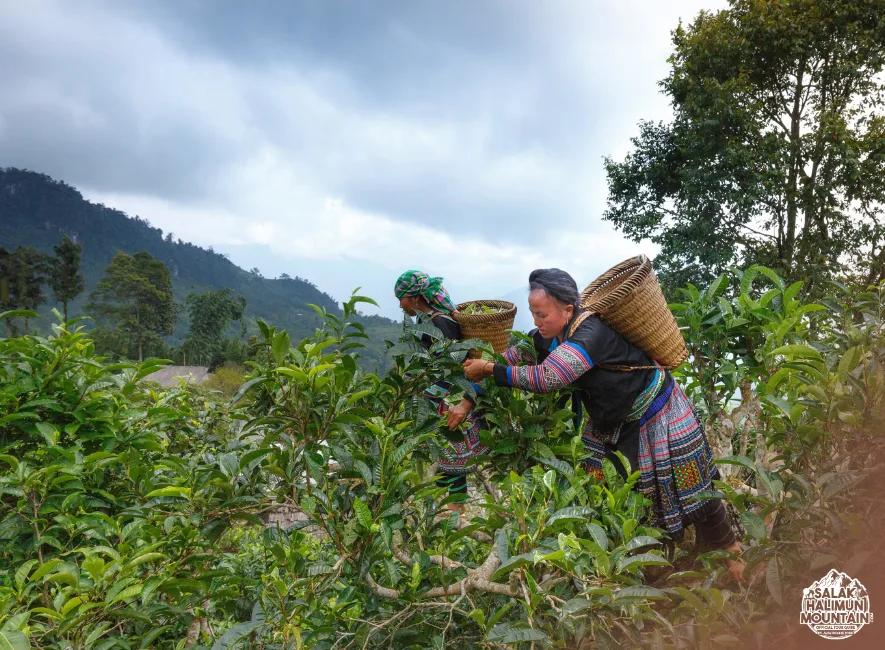
salakhalimunmountain.com – To live on the slopes of Mount Salak is to live in a world dictated by the whims of the clouds. Up here, the weather is not just a topic of conversation; it is a powerful force that shapes every hour of a farmer’s life. One moment, the sun might be bathing the terraced valleys in a brilliant, golden warmth, and the next, a heavy curtain of mist can roll down from the Salak Halimun peaks, swallowing the landscape in a damp, silent embrace. For the communities that have called this volcanic range home for centuries, survival has depended on a deep, intuitive understanding of these atmospheric shifts. How farmers adapt to mountain weather is a story of incredible resilience, ancient wisdom, and a profound respect for the natural cycles of the tropical rainforest.
Reading the Language of the Clouds
Before any modern weather app existed, the farmers of Mount Salak were already masters of meteorology. They have learned to read the sky like a familiar book. When the mist settles low and heavy in the valleys during the early morning, they know it likely signals a clear, hot afternoon. However, if the clouds begin to “boil” around the jagged peaks of the mountain by midday, it is a sure sign that a torrential downpour is only hours away. This ability to predict the microclimates of the mountain allows them to plan their most critical tasks, such as the delicate process of drying coffee beans or harvesting ripe chili peppers, which would be ruined by a sudden drenching rain.
The Wisdom of the Seasonal Calendar
The adaptation begins with the “Pranata Mangsa,” an traditional agricultural calendar that has guided Javanese farmers for generations. While global climate patterns are shifting, the local people still look for biological cues from the mountain to understand the changing seasons. The arrival of a certain species of migratory bird or the specific flowering time of a forest tree tells the farmer when the monsoon rains are about to intensify or when the dry “windy” season is approaching. This synchronization with nature ensures that seeds are planted at the exact moment when the earth is moist enough to support life, but not so saturated that the young sprouts will rot in the mud.
Terracing as a Shield Against the Rain
When you look at the breathtaking layers of rice fields that wrap around the mountain’s curves, you are seeing a masterpiece of climate adaptation. These terraces are not just for aesthetics; they are a sophisticated engineering solution to the challenges of mountain weather. Mount Salak receives some of the highest rainfall in Java. Without these carefully leveled steps, the heavy rains would quickly turn the slopes into a series of mudslides, stripping away the fertile volcanic topsoil. By breaking the descent of the water, the terraces slow the flow, allowing the moisture to soak in deeply while protecting the integrity of the land. It is a system built to withstand the fury of a tropical storm.
Managing the Fury of the Monsoon
During the height of the rainy season, a farmer’s work becomes a constant battle of water management. The irrigation channels, or “selokan,” must be kept meticulously clear of forest debris. If a channel becomes blocked, the diverted water can quickly erode a terrace wall, causing a chain reaction of damage. Farmers spend hours in the rain, clad in traditional bamboo hats or modern plastic ponchos, using their hoes to direct the flow. They understand that the same water that brings life to their crops can also be their greatest enemy if not respected and guided with a steady hand. This constant vigilance is the price of farming in the path of the clouds.
Diversity as an Insurance Policy
One of the most effective ways farmers adapt to mountain weather is through the practice of intercropping and biodiversity. You will rarely see a single crop covering a large area on the slopes of Mount Salak. Instead, a farmer might plant tall corn to act as a windbreak for delicate vegetables, or grow shade-loving ginger beneath the canopy of fruit trees. This diversity acts as a natural insurance policy. If an unseasonably long dry spell hits, the deep-rooted trees may still produce fruit even if the surface crops wither. If a heavy storm batters the valley, the taller plants protect the smaller ones from the direct impact of the raindrops. It is a resilient way of farming that mirrors the complexity of the nearby national park.
The Resilience of High-Altitude Crops
As you climb higher toward the boundary of the Salak Halimun National Park, the types of crops change to match the cooler, cloudier conditions. Here, farmers favor hardy plants like cabbage, scallions, and certain varieties of highland tobacco that thrive in the mist. These plants have adapted to the lower light levels and the constant dampness of the high-altitude air. The farmers here have mastered the art of “mulching,” using dried rice straw or forest leaves to cover the soil. This layer protects the roots from the temperature swings of the mountain—keeping them warm during the chilly nights and preventing the soil from becoming too compacted during heavy rains.
Adapting the Daily Rhythm
The mountain weather also dictates the human rhythm of the village. Work begins at the first light of dawn, often when the temperature is still crisp enough to see your breath. This “golden window” is when the air is most stable and the physical labor is least taxing. By early afternoon, when the heat peaks or the daily clouds begin to gather, the farmers often retreat to their homes or village meeting spots to process the day’s harvest. This schedule is a direct adaptation to the predictable cycle of mountain convection. Living here means being flexible; a farmer’s plan for the day is always written in the sky, and they are always ready to pivot when the wind changes direction.
Traditional Architecture and the Elements
The adaptation extends to the very houses where the farmers live. Traditional Sundanese homes in the Salak region are often built on stilts with high-pitched thatch or tile roofs. This design is a response to the wet mountain climate. The elevation keeps the living space dry during floods and allows for air circulation to prevent mold in the humid environment. The steep roofs ensure that even the heaviest mountain downpours shed water quickly. Inside, the “parako” or traditional hearth is kept burning not just for cooking, but to provide warmth and to dry out the interior of the house when the mountain mist lingers for days on end.
The Spiritual Bond with the Weather
To the farmers of Mount Salak, the weather is not a random series of events, but a manifestation of the mountain’s spirit. When a long drought occurs or when a storm is particularly destructive, it is often seen as a sign that the balance between humans and nature has been disturbed. This belief reinforces a culture of ecological respect. There are specific rituals and offerings made at mountain springs to ask for the “right” kind of rain—enough to fill the fields, but not so much as to cause the earth to slide. This spiritual connection fosters a sense of stewardship, as the farmers know that their survival depends on keeping the mountain and its forests healthy.
Looking to a Changing Future
While their ancestors have adapted to the mountain for centuries, today’s farmers are facing new challenges. Climate change is making the once-predictable patterns of Mount Salak more erratic. The rainy seasons are sometimes shorter but more intense, and the dry seasons can stretch unexpectedly. However, the farmers are proving their resilience once again. Many are working with conservation groups within the Salak Halimun National Park to restore forest buffers and implement new water-saving techniques. They are blending their traditional knowledge with modern ecological science to ensure that their way of life can survive into the next century, no matter what the clouds may bring.
Experiencing the Mountain Rhythm
When you visit the slopes of Mount Salak with us, we don’t just show you the views; we help you feel the pulse of this mountain life. You will see how the farmers move with the weather, how they adjust their tasks as the mist rolls in, and how they celebrate the arrival of the sun. It is a lesson in patience and harmony that is hard to find in the city. Watching a farmer stand at the edge of his terrace, looking up at the summit of Salak to judge the afternoon rain, is to see a human being in perfect sync with their environment. It is a beautiful, humble way of living that reminds us all of our own connection to the earth.
So, if you’re ready to explore the wonders of Mount Salak Halimun, head over to our ONLINE BOOKING PAGE and let’s start planning your adventure. Or simply CLICK THIS LINK to chat with us on WhatsApp.
With our team, you’re not just getting a guide; you’re gaining a local friend who will ensure your trip is nothing short of extraordinary.